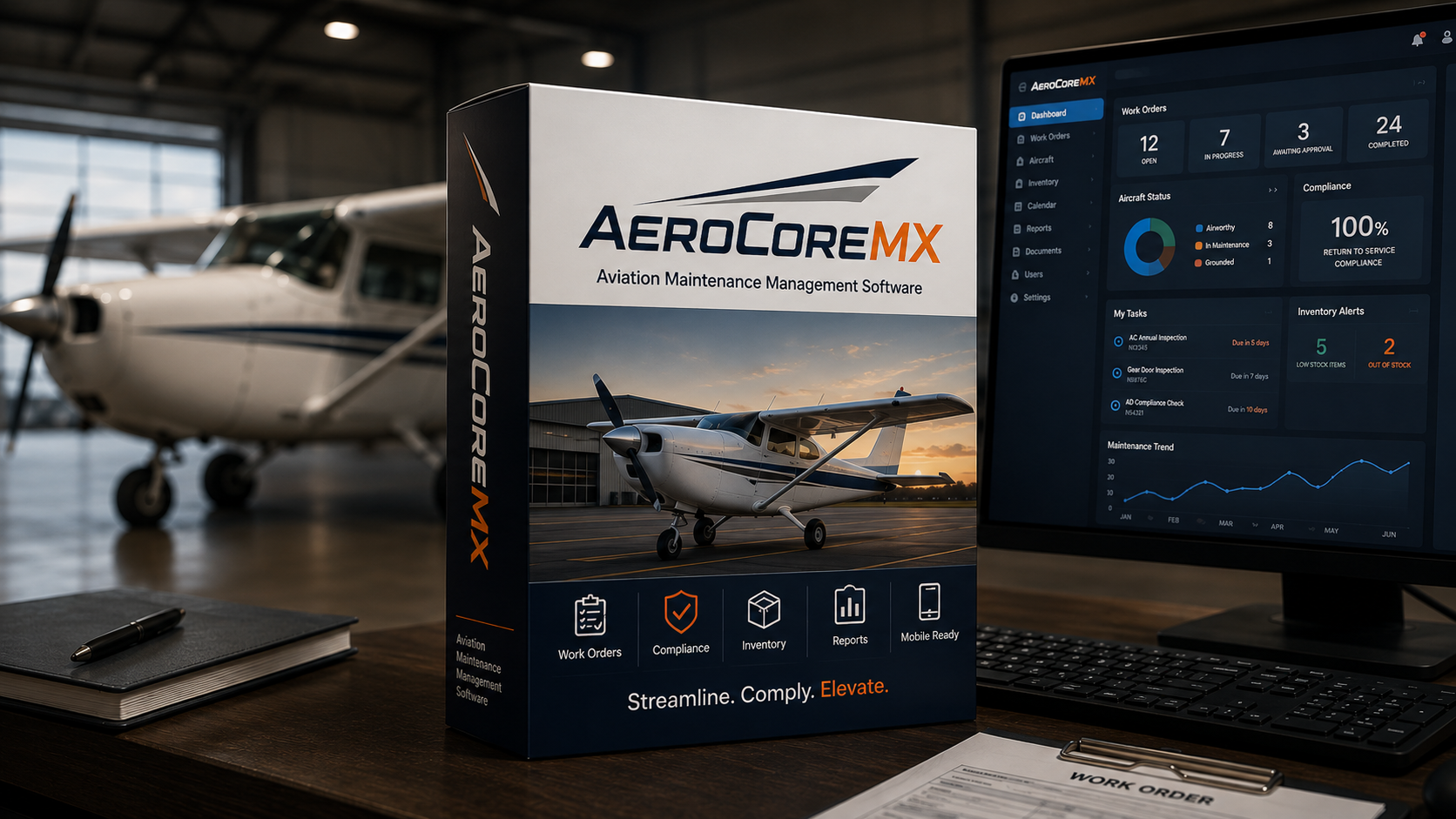
What to Look for in Aviation Maintenance Management Software: A Buyer's Guide
Every maintenance management platform claims to make your shop more efficient. The differences that actually matter show up once you're past the sales pitch and into daily use — and they're worth checking for before you commit, not after.
Compliance-First Design
Aviation maintenance software isn't optional record-keeping — it needs to hold up to real scrutiny. Look for software built specifically around work orders, non-routine write-ups, and return-to-service documentation, with sign-offs and audit trails built in from the start rather than added on later.
Usability for Techs, Not Just Admins
A lot of maintenance software is designed for the office and tolerated on the shop floor. The better question is whether a tech mid-shift can actually use it quickly — digital task cards, PIN-based sign-offs, and quick lookups matter more day to day than a polished dashboard nobody on the floor ever sees.
Data Security and Backups
Ask directly: is data backed up automatically, and is it stored off-site? A platform that can't answer that clearly is asking you to trust your compliance records to a single point of failure.
Flexible, Transparent Cost
Software that locks you into a rigid package regardless of what your shop actually needs tends to get expensive fast. Look for the ability to add or remove specific modules as your shop grows, with billing that's easy to understand and easy to change.
Support That Actually Responds
When something goes wrong mid-job, the speed and quality of support matters more than almost anything else on this list. A real support ticket system with a track record beats a generic contact form every time.
The Short Version
Compliance-first design, a workflow techs will actually use, real data protection, flexible pricing, and responsive support — that's the checklist worth running any maintenance software through before you commit to it.